A Better Way to Teach Claims, Counterclaims, and Rebuttals: Logical, Sophisticated Argument Writing
Teaching claims, counterclaims, and rebuttals always brings up the same debate: should we teach a formula or avoid formulas altogether? Here’s my honest take — students need a pattern before they can write with sophistication. The issue isn’t structure itself; it’s the wrong structure.
Most students are taught to write a separate “counterclaim paragraph” right before the conclusion. I still see it being taught today; I even see it in college textbooks. Maybe in some way that structure has merit, if done well. But that's the problem, especially for middle and high school writers. For the most part, that outdated model leads to choppy reasoning, weak commentary, and writing that feels separated instead of intentional. It also doesn’t reflect what state assessments reward or what AP Lang actually values.
My method rooted in logic, nuance, and sophisticated argument writing.
I teach claims, counterclaims, and rebuttals as a package inside each body paragraph, where the counterclaim directly challenges the logic of the claim and the rebuttal strengthens it. This structure helps students see the architecture of argument writing clearly — and once they internalize the pattern, they can move into more flexible, advanced writing with confidence.
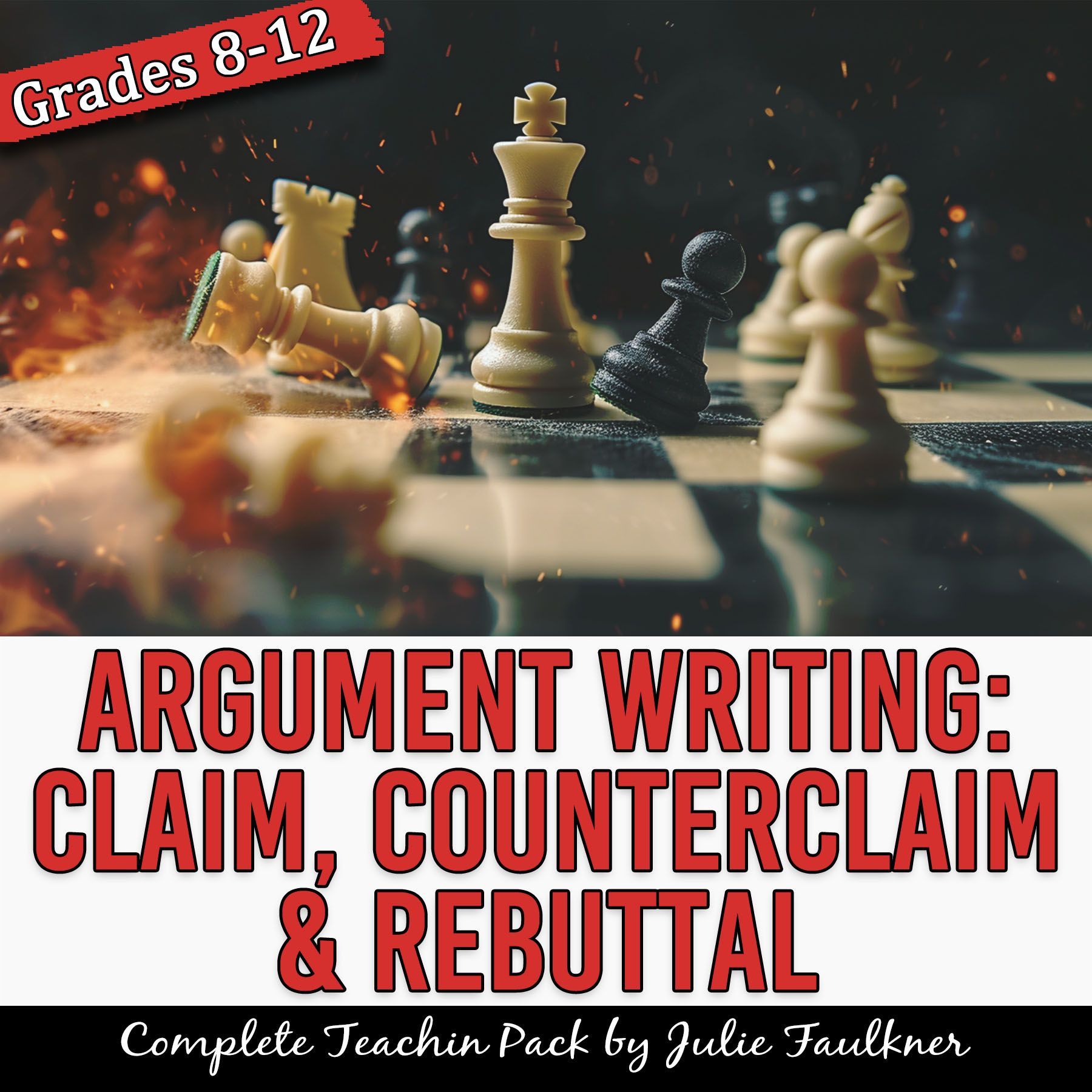
In this post, I’ll walk you through exactly how I teach Claims, Counterclaim, Rebuttals, why this approach works, and how tools like my Claim/Counterclaim Imposter Game and Claims, Counterclaim, Rebuttals Teaching Pack help students master the logic behind strong, sophisticated argument writing.
1. Start With the Logic: What Makes a Counterclaim “Real”?
Most students think a counterclaim is just “the opposite side.” But that’s not enough — and it’s why their writing feels vague or disconnected.
A real counterclaim must directly respond to the logic of the claim. Not the topic. Not the general idea. The logic.
For example:
Claim: Later school start times improve academic performance by aligning with teen sleep cycles.
Logical Counterclaim: Later start times don’t improve performance if students simply stay up later, resulting in no net gain in sleep.
This counterclaim works because it challenges the reasoning behind the claim — not just the topic of school schedules.
This is the foundation of everything I teach: Claims and counterclaims are a matched set. They must speak to each other, aka "have a conversation."
2. Teach CCR as a Package — Not Three Separate Skills
I never teach claims, counterclaims, and rebuttals as isolated pieces.
Students need to see them as a conversation:
- The claim makes a logical argument.
- The counterclaim challenges that logic.
- The rebuttal explains why the claim still stands.
This is why I teach Claims, Counterclaims, and Rebuttals inside the body paragraphs, not as a separate “counterclaim paragraph” tacked on before the conclusion.
When students learn CCR as a package, they naturally build:
- stronger reasoning
- clearer commentary
- more sophisticated argument structure
- better alignment with state test rubrics
- better alignment with AP Lang expectations
And honestly? Their writing doesn't just sound smarter; it is!
3. Use the Imposter Game to Teach Logical Counterclaims
One of the biggest challenges is helping students distinguish between:
- a logical counterclaim, and
- a random, vague, or irrelevant one
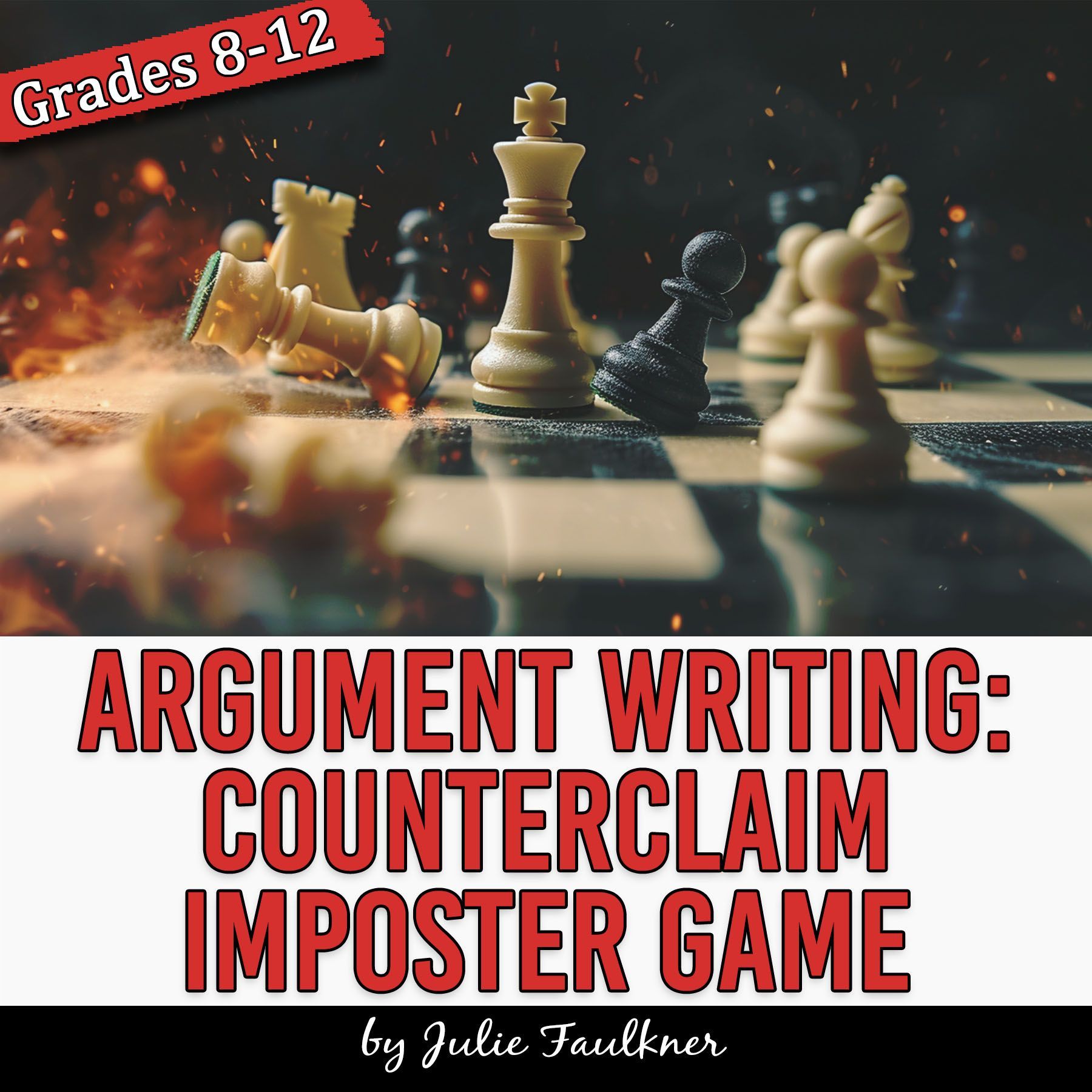
That’s why I created the Claim/Counterclaim Imposter Game.
Each set includes:
- 1 claim
- 1 correct counterclaim
- 2 imposters
Students must move around the room (or work in groups) to find the correct match — and then explain:
A. Why the correct counterclaim logically refutes the claim
B. Why the impostors fail logically
This forces them to think about reasoning, not just matching opposites. It’s the perfect bridge between understanding the concept and applying it in writing.
4. Move Into Writing: How to Weave CCR Into a Body Paragraph
Once students understand the logic, I teach them how to embed CCR inside a paragraph.
Here’s the structure I model:
- 1. Claim
Make a clear, defensible argument.
- 2. Evidence
Support the claim with a specific detail, quote, or example.
- 3. Commentary
Explain how the evidence supports the claim.
- 4. Counterclaim (woven in)
Acknowledge a logical challenge to your reasoning.
- 5. Rebuttal
Explain why the claim still holds despite the counterclaim.
Here’s a simplified example using one of the game sets:
- Claim: Student activism builds civic responsibility.
- Counterclaim: However, some argue that activism can distract students from academics and oversimplify complex issues.
- Rebuttal: While activism may become a distraction, structured activism actually deepens students’ understanding of issues and strengthens their ability to balance responsibilities.
Of course, students can "move" this formula around if they see fit, especially if they are strong writers. I tell those stronger writers that I never want them to feel like they are in a box. However, this is a very good start; it's comfortable for weaker writers; and it's good for everyone on timed writing who feels anxious about getting words on a page. This structure mirrors what AP Lang rewards: commentary, reasoning, and complexity.
5. Connect to AP Lang (Or other EOC/State Writing Assessments): Why This Method Works for the Rubric
AP Lang does not require a counterclaim. But it absolutely rewards:
- acknowledging limitations
- addressing alternative perspectives
- showing nuance
- demonstrating sophistication
A well‑placed counterclaim inside a paragraph does all of that.
When students learn to integrate counterclaims as part of their reasoning — not as a separate paragraph — they naturally build:
- line of reasoning
- commentary
- to‑what‑extent thinking
- complexity
This is exactly what earns higher scores in the Evidence & Commentary and Sophistication rows.
My Claims, Counterclaims, and Rebuttals method prepares students for that level of writing long before they ever take AP.
Conclusion
Want to Teach CCR This Way? Here Are the Tools I Use. Everything I described above is built into my Claims, Counterclaims, and Rebuttals Teaching Pack, which includes:
- direct instruction
- guided notes
- real‑world examples
- guided practice
- graphic organizers
- independent practice
- a reusable analysis tool
- and now the Claim/Counterclaim Imposter Game
It’s the full system I use to teach Claims, Counterclaims, and Rebuttals in a logical, modern way that aligns with what students actually need to succeed.
Watch a version of this post on Facebook or Teachers Pay Teachers. And see more AP Lang ideas on my Instagram Highlight.

Love this content?
Sign up for my email newsletter with more tips, ideas, success stories, and freebies!