Curing “Activity‑itis”: How to Diagnose & Eliminate Busywork So You Can Assign Meaningful, Standards‑Based Activities
Class time is precious, and with so many standards to cover, every classroom activity needs to be purposeful, rigorous, and aligned to learning goals. Yet many of us have looked back at assignments and realized they were more busywork than standards‑based learning. Some activities are fun or cute, but they don’t always build skills or deepen understanding. I call this “activity‑itis”—the tendency to fill time instead of advancing learning. This post will help you evaluate the quality of your classroom activities, identify busywork, and redesign tasks to truly support student growth.
“Activity‑itis”? Understanding Busywork in the Classroom
Classrooms are full of movement, but not all movement equals learning. “Activity‑itis” is what happens when tasks look engaging on the surface yet fail to build skills, deepen understanding, or connect to standards. It’s the academic version of busywork: students are cutting, coloring, gluing, crafting, or completing steps, but they can’t articulate why they’re doing it or what they’re supposed to learn. When an activity is cute, trendy, or time‑filling rather than purposeful, it drains precious instructional minutes and masks the real issue — a lack of clarity, rigor, and alignment.
Symptoms of Activity‑itis: How to Spot Low‑Value Activities
The students have no idea why they are doing the activity.
You could probably argue that there will always be students who are clueless in the sense that they aren’t trying. In this case, the problem goes much deeper. There are times when I dive right into a lesson or activity and just don’t tell my students why we are doing it or what it connects to. If I just forget to tell them, that’s one thing, but if I can’t answer the questions “Why are we doing this?” or “What are they learning from doing this?” then why are we doing it?
Why are we building a model of a fireproof house with our 451 unit? Guilty. Why are we drawing a picture of our favorite character in The Lord of the Flies? Guilty again.
Instead, let’s trace the symbol of fire throughout the novel and analyze how it changes. Let’s read an informational text about how fire works and make literal and symbolic connections. If we want students to get to know characters, let’s have them create a body biography with text-based descriptions.
Just making some tiny, purpose-driven adjustments can spark huge changes in students’ growth and understanding.


The students are busy, but there’s no challenge.
I suppose this could happen for a couple of reasons, but like I said before, class time is precious and limited. Coloring, watching movies, listening to a podcast — just for the heck of doing it or because everyone else on social media is doing it. I actually use and sell resource for these types of activities; however, there is always something students are doing that is skills based.
Yes, coloring and movies make excellent brain breaks and sub plans, but even then, I just can’t get behind vacuous time-fillers. If students are coloring in my class, they will be editing sentences in order to color by number. If they are watching a movie, they are analyzing structure and style. More on using movies effectively in this post. If we are listening to a podcast, we are making connections, analyzing plot, or more — we aren’t just doodling.
There is always something that can be done to up the ante with any assignment.


The activity steps too far out of its subject, isn’t grounded in standards, or isn’t connected to any prior or future learning.
I think this one creeps up a lot in English class because we do so much with texts that we feel we need to introduce. When I first started teaching The Crucible, I felt I had to tell students everything they needed to know about Puritans before we started the unit. Then I had to spend another day or so talking about the 1950s. Then, yet another day was spent covering the elements of drama. A week or more had passed and we hadn’t even started reading the text; and my kids were bored and over it.
Eventually, I stepped back and asked myself, what I am I doing wrong? I love this play so much, but the kids hate it.
Then, I realized: it wasn’t the play they hated, it was the presentation. Wow.
So, how did I fix it? I asked myself one question: Why am I teaching this play? The answer? It wasn’t so they could learn the history of the Puritans. It wasn’t so they could understand the 1950s. It is so we could analyze a true hallmark in the canon of American literature — for the literature, to see how an author can craft a story that conveys both so creatively and expertly that we really don’t need much else than the text itself. In that regard, the only intro material I kept was one short informational text article about McCarthy and a quick vocabulary lesson on allegory. Then, we just dig in. I let the text do the talking. I developed questions, prompts, close reading exercises, and activities that drove students further and further into the text.
The result? Students who enjoyed the play more than ever before, and students who were mastering standards. More ideas on how to start a unit here.

The activity lacks true engagement and/or collaboration.
Students aren’t talking at all or aren’t talking about the actual task. How many times have you overheard students saying “What’s for lunch?” or “I have to work this afternoon” during an activity?
Sure, students get off task with even the best-designed activity. However, a key symptom of activity-itis is off-task students. If I have students in groups, what I really want them to be able to do is collaborate, bounce ideas off each other, and share out. I want them to even learn to hear different ideas and defend their own answers. I want my activity to garner 100% student engagement.
I love to have students think first, and talk second, so they have something prepared when they join the group. Task cards are hugely helpful with getting kids thinking and giving them direction. More ideas on using task cards in the classroom here.


There is no assessment, the assessment isn’t a challenge, or there is a discrepancy between the assessment and the activity.
If, at the end of the day, I’ve done a lesson and can’t measure whether the students really “got it,” then I’m in panic mode. For me, it can be as simple as asking them. Other times, I’ll have a worksheet they have to complete. Other people like to do the ticket out the door.
Another issue here is when the assessment only asks students to regurgitate what they’ve already been told in class, and there’s no application to demonstrate their learning. It’s very important that students can apply the skills they’ve been taught, so you can see if it stuck. I rarely give a final exam on the story we’ve read in class, where students recall details of the story. That doesn’t assess their hopefully newly acquired knowledge of plot, characterization, or symbolism. Rather, they will write about it, do another project with it, or read a shorter text and answer questions that test those skills.
Whatever you choose, again, it needs to be purpose-driven and truly measurable.
The Cure: How to Design Purposeful, Standards‑Based Activities
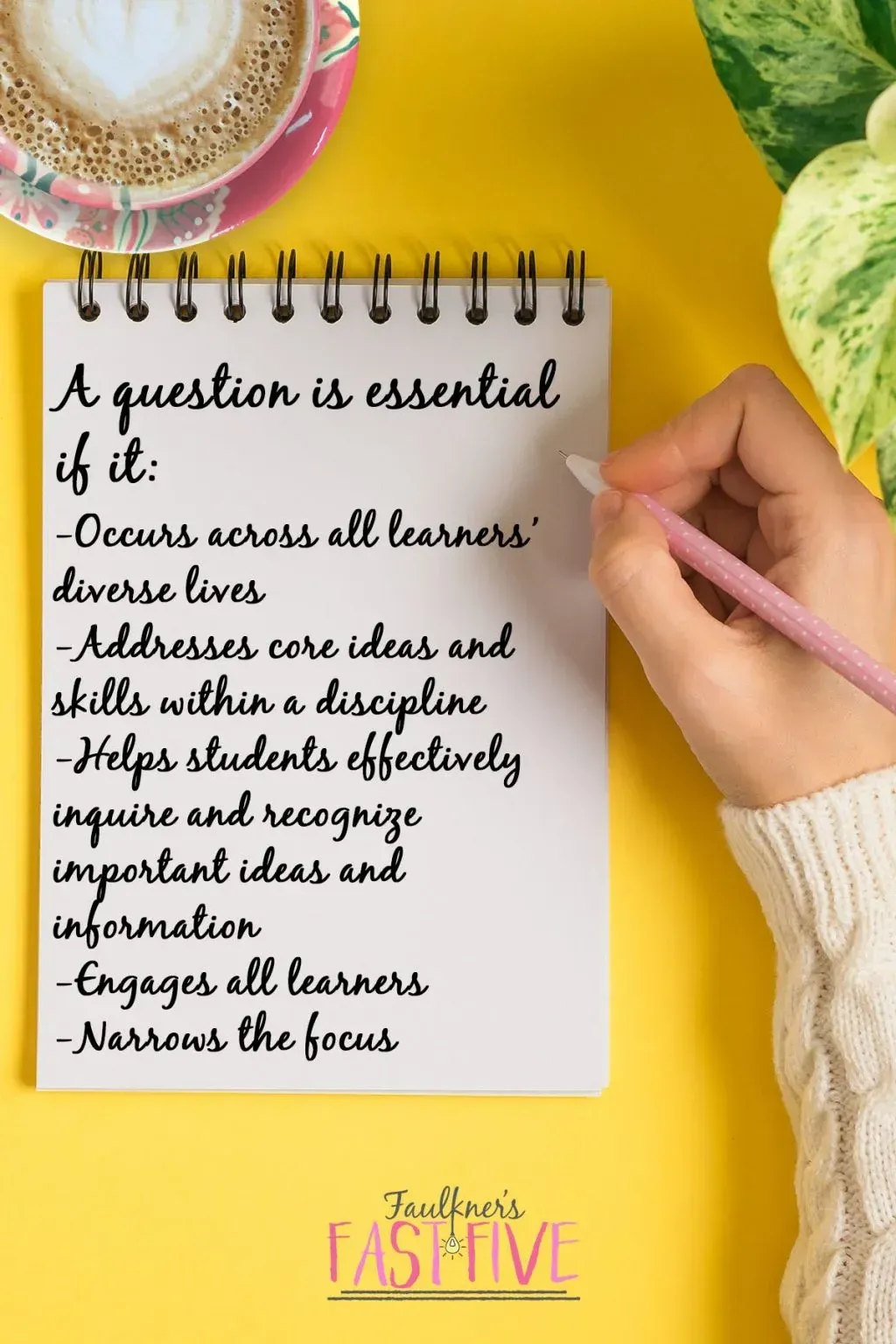
- Design, discuss, and post essential questions to drive planning and measure learning. For more tips on creating essential questions and creating standards-based lessons and activities, take a look at my CC standards-aligned depth of knowledge chart, where I’ve aligned every ELA standard 9-12. More on using essential questions here.
2. Student self-reflection. This isn’t always easy, but with particularly reluctant groups, I have success with my weekly reflection task cards that come in my student-directed data pack. More on data collection here.

3. Think about the end goal when planning. In other words, plan backwards. In order to help myself remember this important piece, in every one of the teacher planners that I design, I have a reflection page at the end of the month. It reminds me to pause and reflect on what we accomplished and need to work more on. More on planning backwards in this post.

4. Assessments and measurements that are consistent and align with the skills.
5. Make connections to prior and future learning. This can be done effectively if you work inside units where a big picture is evident. A KWL chart activator is a perfect tool for making connections. I also love to do the 3-2-1 strategy.
Conclusion
Yes, there are crazy-day schedules, half days, sub days, or sick days, or any number of random odd days occasionally, when we need a quick, low-stakes, no prep activity, but even those days need to be utilized to matter.
Ultimately, I now evaluate each lesson and activity I plan for its standards-based value.
Love this content?
Sign up for my email newsletter with more tips, ideas, success stories, and freebies!