Transform Your Middle-High School Writing Instruction with Skill-Focused Workshops
If you’ve taught writing for more than five minutes, you know the pattern. You pour your heart into a full writing unit — the mentor texts, the modeling, the drafting days, the revision conferences — and then the next essay rolls in and suddenly your students have forgotten what a thesis is. Commentary? Gone. Sentence variety? Missing in action.
Whether you teach middle school ELA, high school English, dual enrollment, or AP Lang, your curriculum probably follows a familiar pattern: a unit built around a specific mode or essay outcome. Maybe you teach three major essays in Comp I. Maybe your AP Lang units build toward the three FRQs. Maybe your gen‑ed classes move through narrative, informational, and argumentative writing.
Those full‑length units matter. They give students structure, purpose, and a clear destination.
But here’s the problem: students don’t learn writing skills in giant units. It’s not that students aren’t trying. It’s that writing is too big to learn in one sweep. We ask them to juggle thesis, evidence, commentary, transitions, structure, tone, and clarity all at once, and then we’re surprised when they drop something.
The truth is: your writing units aren’t the problem. The problem is more that students struggle to learn writing in giant chunks, and that is not a product struggle. They learn writing in small, focused, repeated workshops woven into the unit — one skill at a time, practiced deeply, revisited often. That’s where skill‑focused writing workshops transform everything.
Below are five reasons shifting to one‑skill‑at‑a‑time workshops — inside your existing writing units — makes writing instruction more effective, more manageable, and more responsive to what students actually need.
1. Full Writing Units Give Students Direction — Workshops Give Them Tools
Your curriculum matters. Your units matter. The big picture matters.
Whether you’re teaching:
- three major essays in Comp I,
- narrative → informational → argumentative in gen‑ed ELA, or
- units built around the three tested FRQs in AP Lang,
your units give students a destination. They tell students what they’re writing, why they’re writing it, and how the pieces fit together. But inside those units, students still struggle with the skills that make writing work.
A unit says: “Write an argumentative essay.”
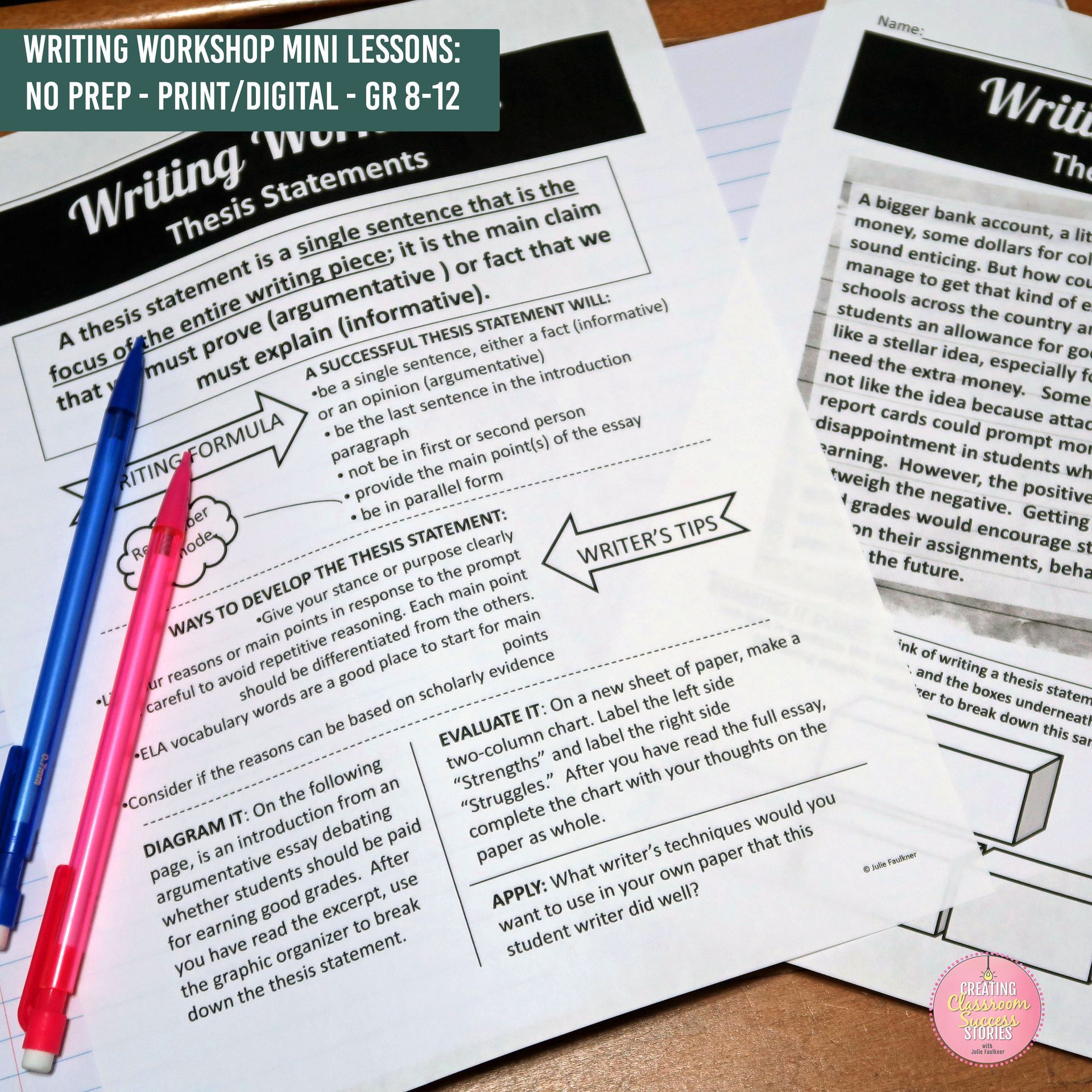
A workshop says: “Here’s how to build a thesis that actually works.”
A unit says: “Use evidence.”
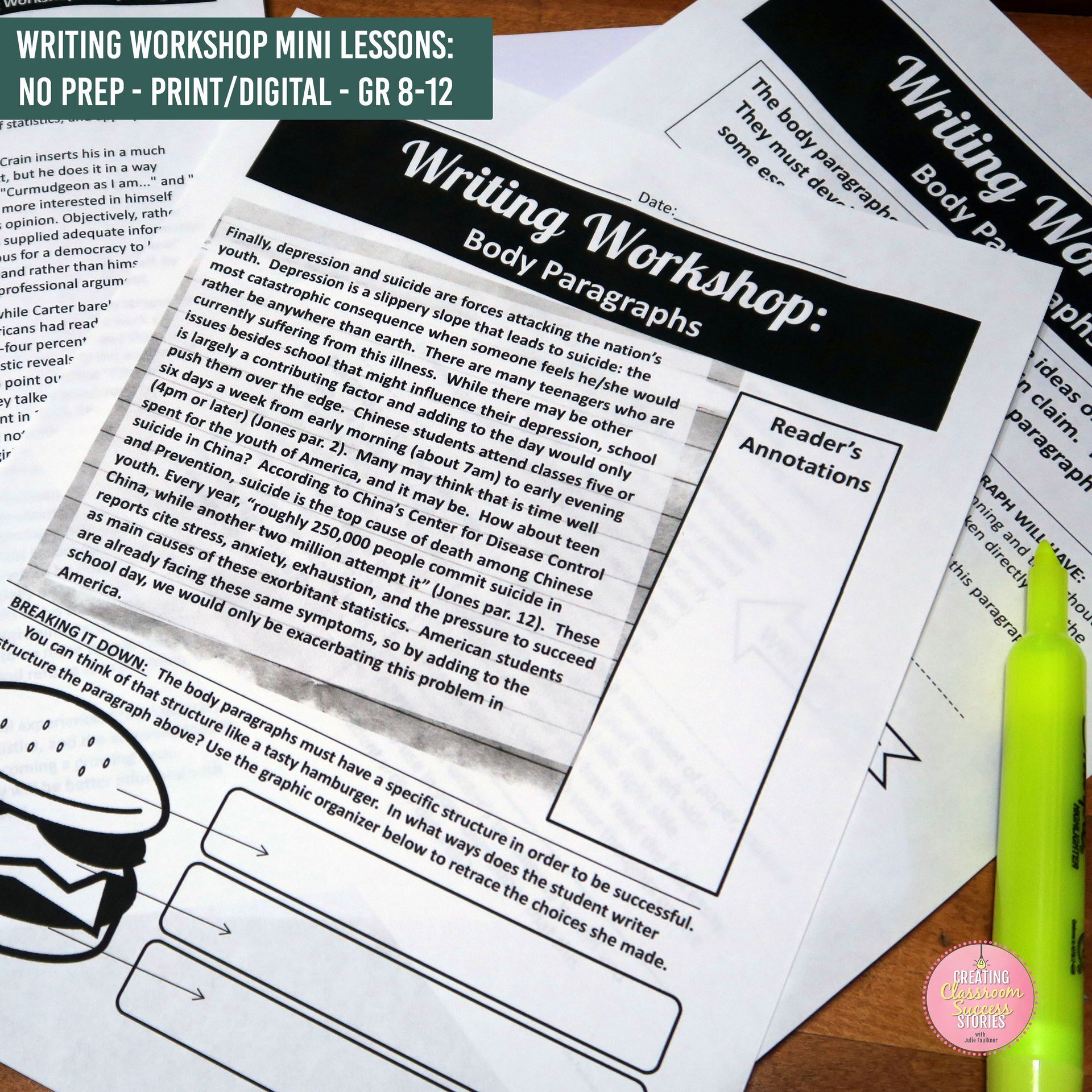
A workshop says: “Here’s how to weave a quote into your sentence without derailing your paragraph.”
A unit says: “Revise your draft.”
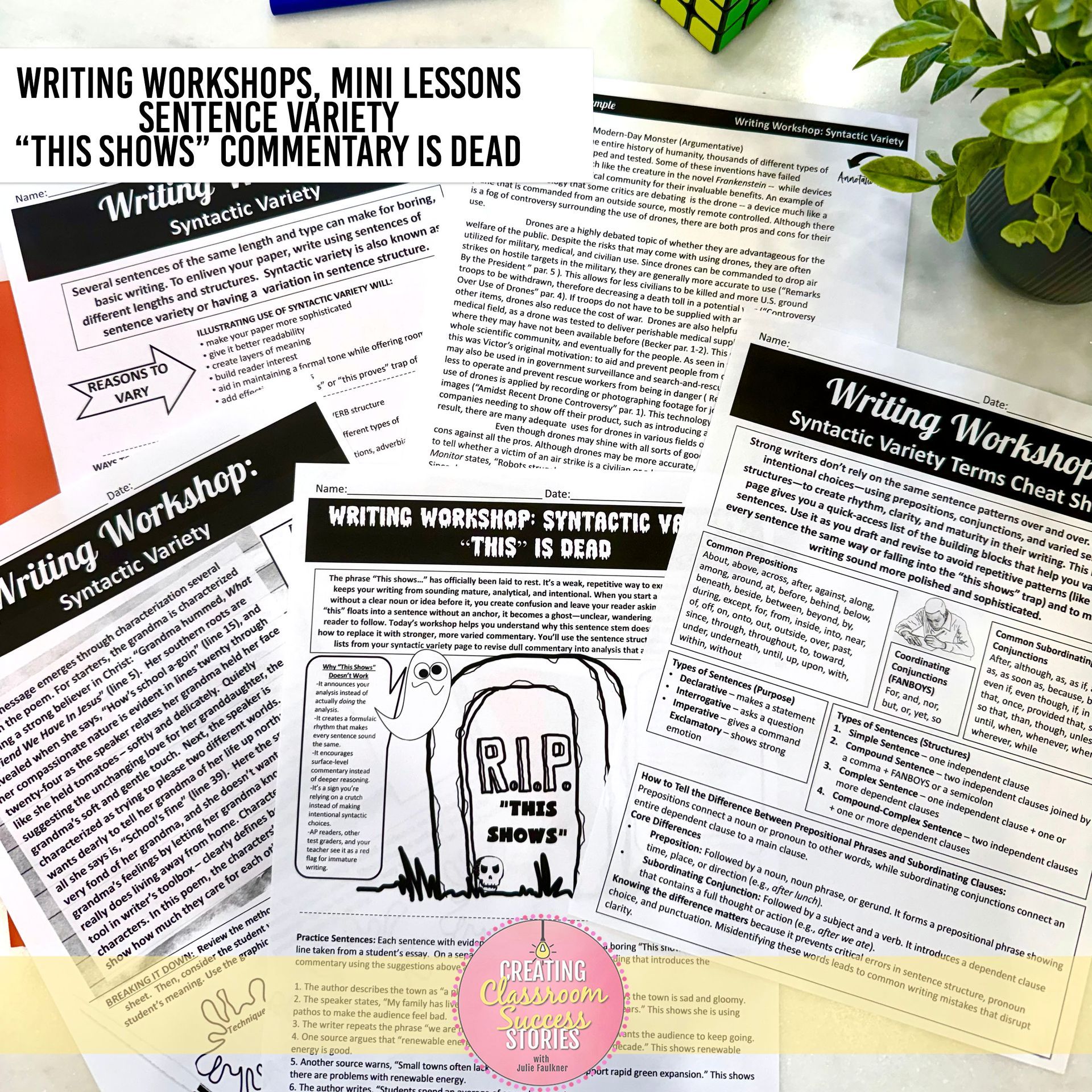
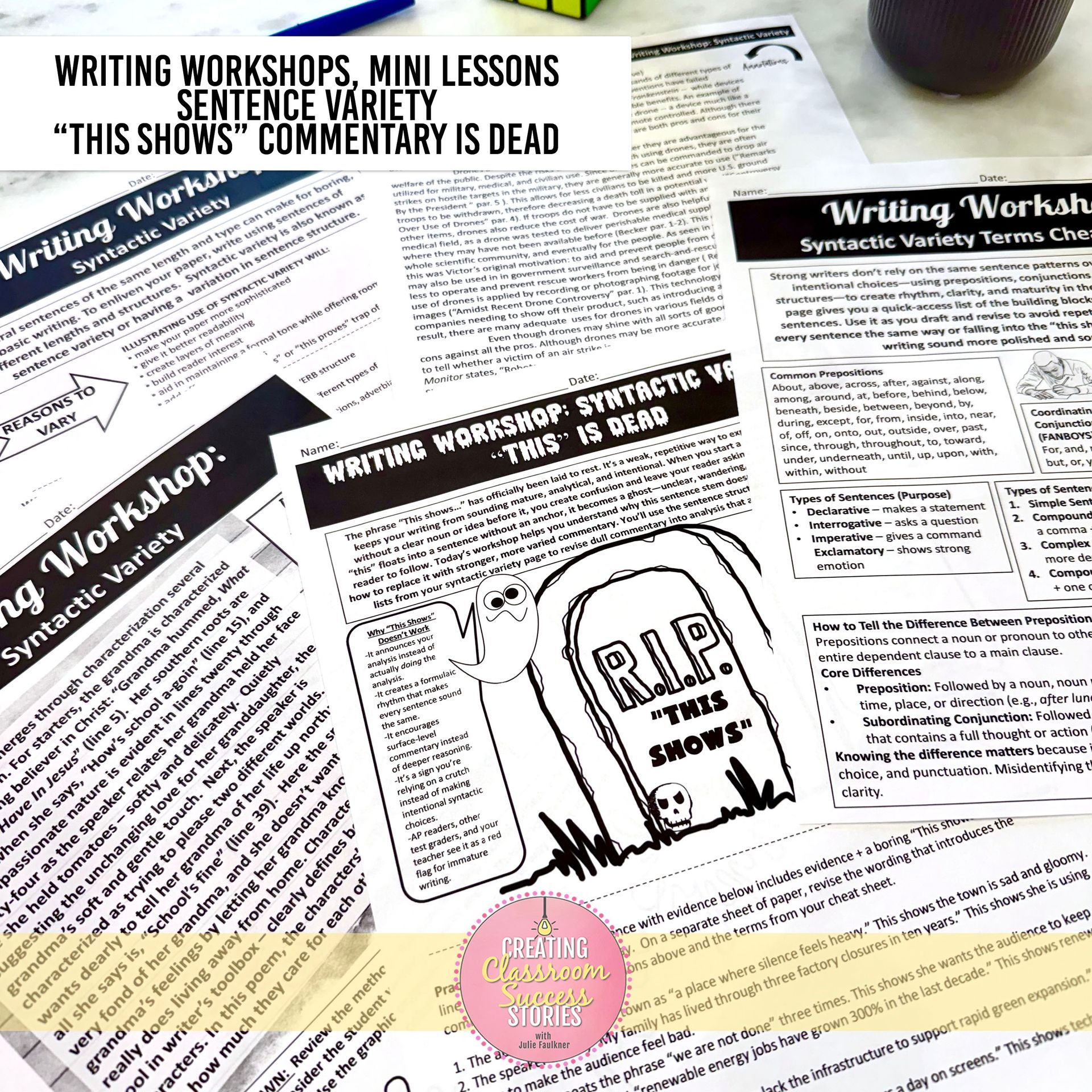
A workshop says: “Here’s how to vary your sentences so your writing doesn’t sound like a metronome.”
The unit gives the destination. The workshop gives the vehicle.
2. One Skill At A Time Keeps Students From Shutting Down
You’ve seen it: a student staring at a blank Google Doc, convinced he/she “can’t write.” But when you sit beside him/her, you realize he/she doesn’t actually struggle with writing — he/she struggles with one part of writing.
Maybe she doesn’t know how to start.
Maybe he doesn’t know what to say about a quote.
Maybe her sentences all march in the same stiff rhythm.
Maybe his commentary is stuck in the “This shows…” graveyard.
Skill‑focused workshops meet students exactly where they are. Instead of reteaching the entire writing process, you reteach the one skill they need right now. And suddenly, writing feels doable again — for them and for you.
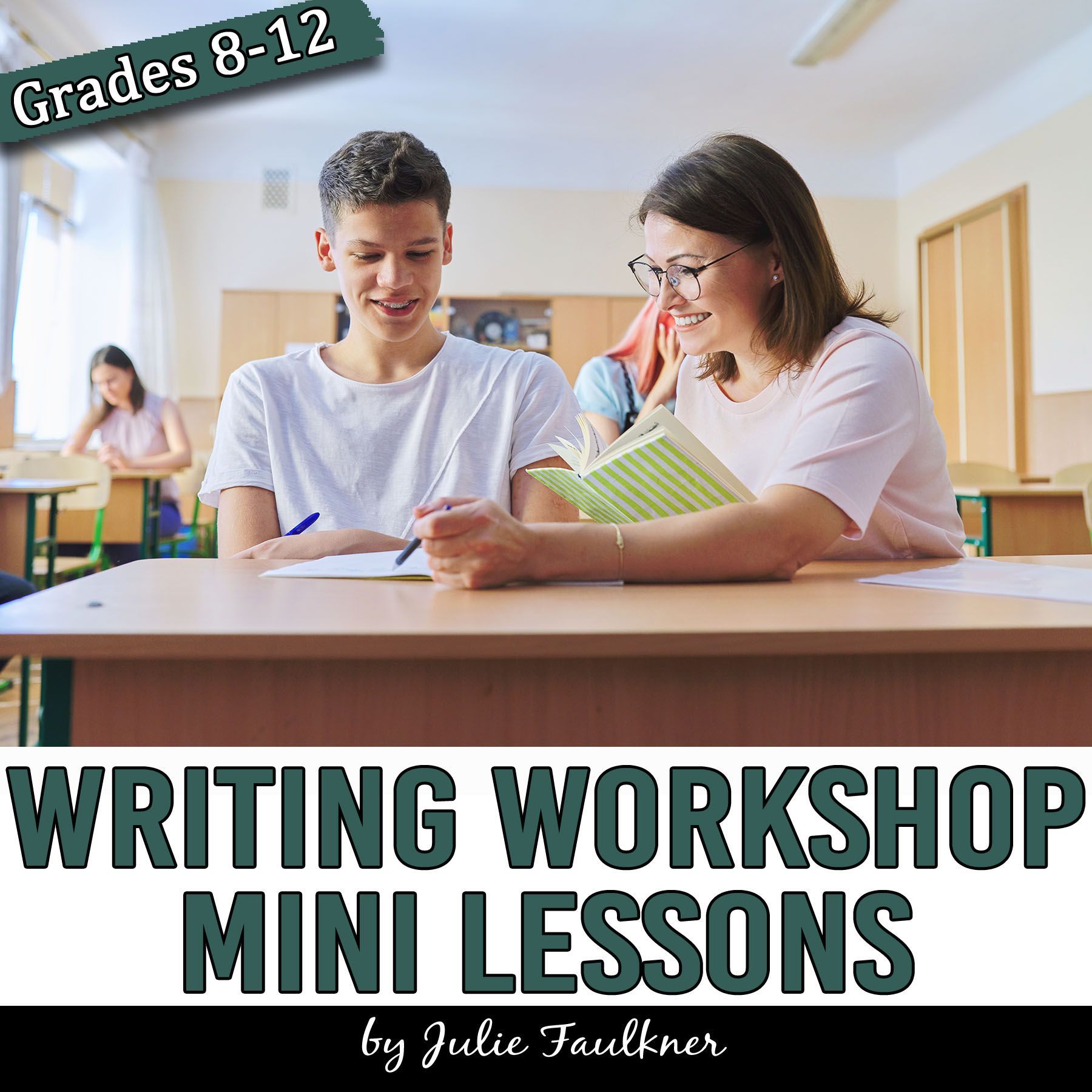
3. A Mini Workshop Gives Students A Full Period To Focus And Practice
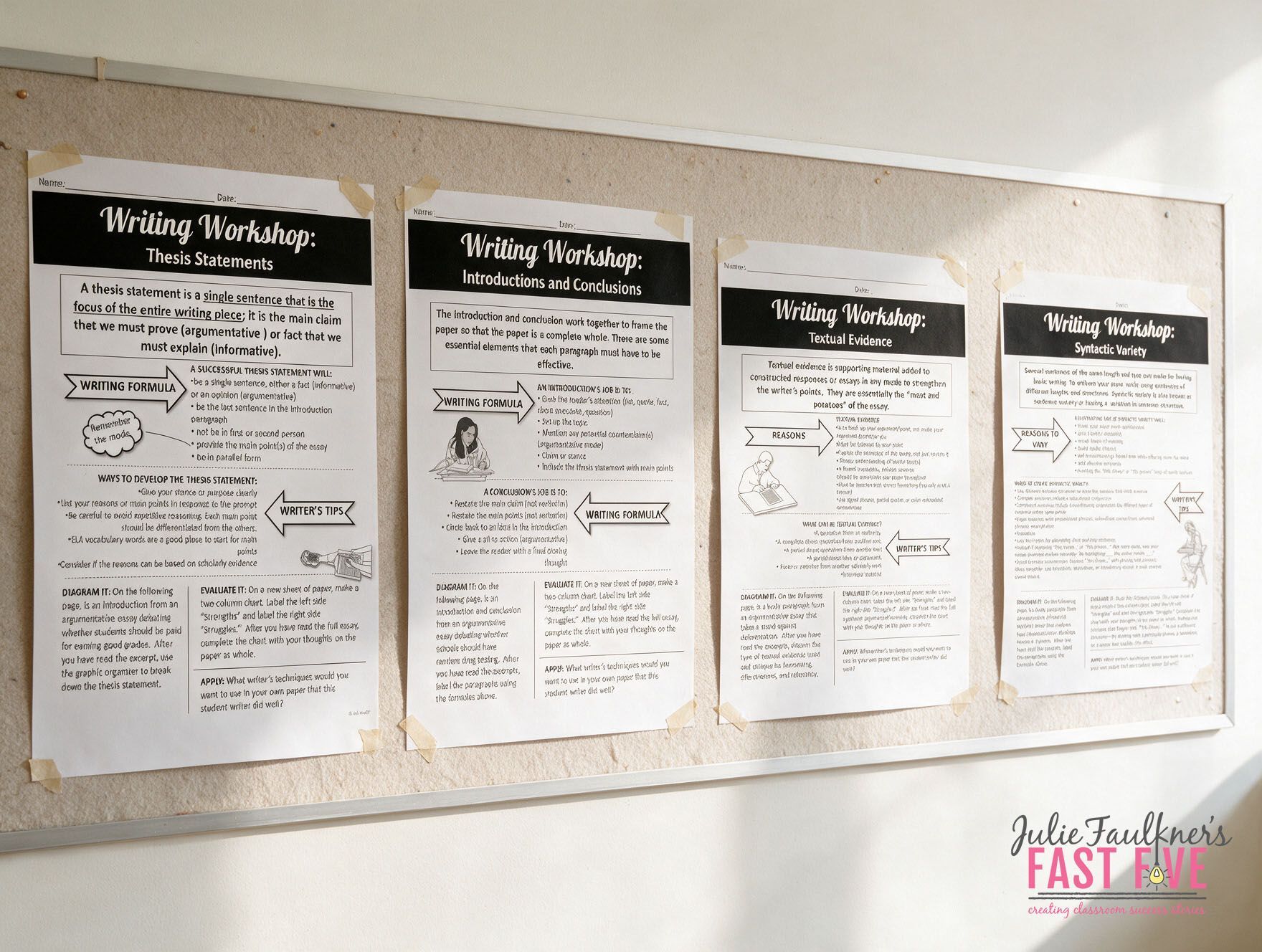
When I say “mini workshop,” I don’t mean a five‑minute tip or a quick warm‑up. Mini refers to the scope, not the time. A mini workshop is “mini” because it focuses on one skill — thesis, evidence, commentary, sentence variety, cohesion — instead of trying to tackle the entire writing process at once.
But the workshop itself? It’s a full class period of real writing work.
Students need time to:
- take notes
- study mentor texts
- annotate real examples
- practice the skill
- apply it to their own writing
When you give them a whole period to do that, the learning sticks in a way a rushed mini‑lesson never could. A mini workshop is small enough to be digestible, but long enough to be meaningful.
It’s not fast — but it’s focused. And that’s why it works.
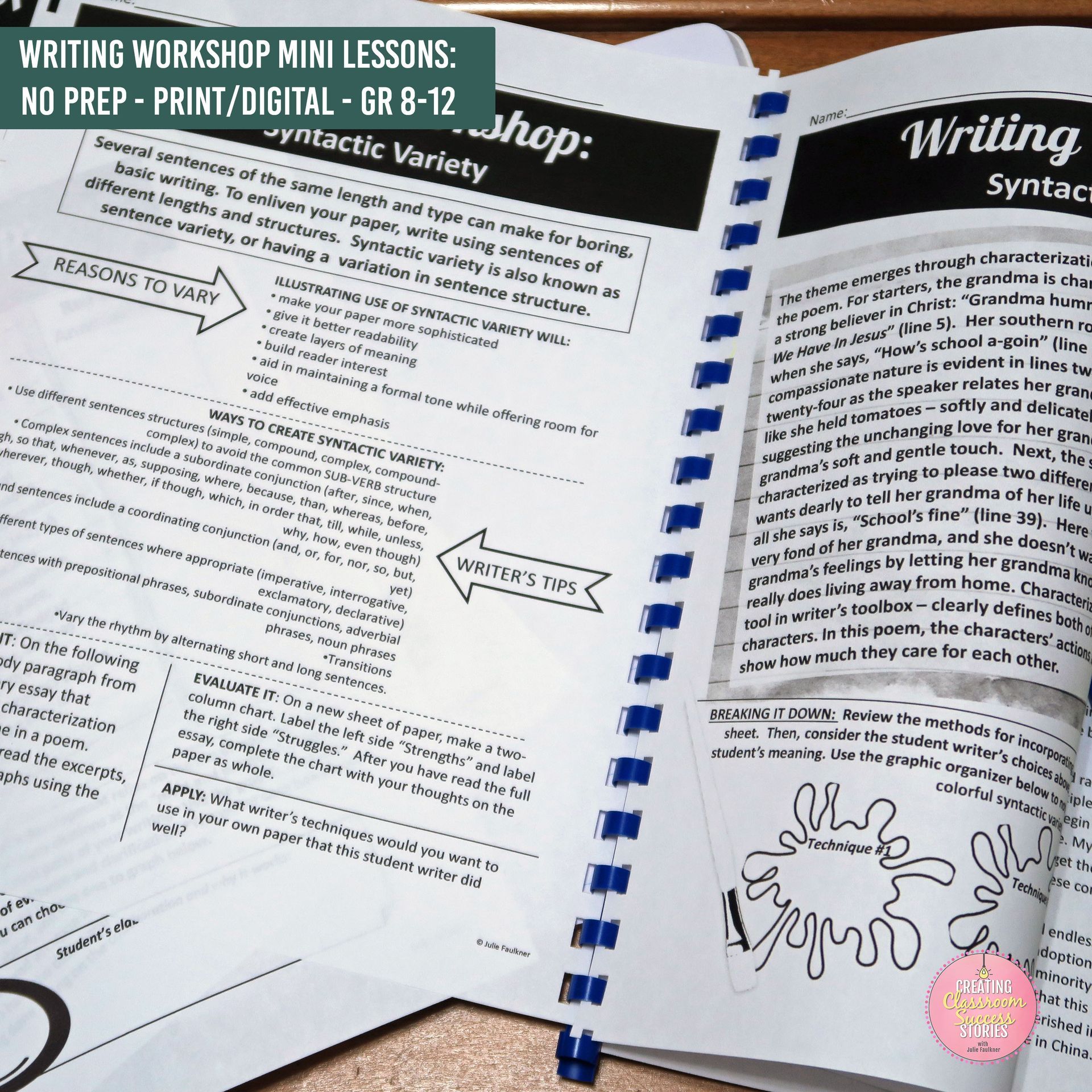
4. Workshops Weave Naturally Into Any Writing Unit — Drafting, Revising, or Reteaching
This is the part teachers fall in love with: workshops don’t replace your writing units. They strengthen them. And here’s the truth most writing teachers never say out loud or are never told in traditional teacher-prep pedagogy courses: You don’t need — and shouldn’t try — to teach every writing skill in every unit.
In my own classes, I don’t run all seven workshops in one unit. I don’t even run half of them.
For example, in Comp I, I might teach thesis and introductions early in the semester, then wait until the next essay to teach evidence and commentary. Sentence variety might show up during revision days in Unit 2, and cohesion might be a reteach moment after scoring Unit 3.
In AP Lang, my three units build toward the three FRQs — but I weave workshops in as students need them. A thesis workshop before FRQ 1. A commentary workshop during FRQ 2 drafting. A sentence variety workshop right before FRQ 3 revision. Mentor texts come in and out as exemplars, not as a rigid sequence.
Workshops don’t fight your curriculum. They support it. They let you teach the right skill at the right moment — not every skill at every moment.
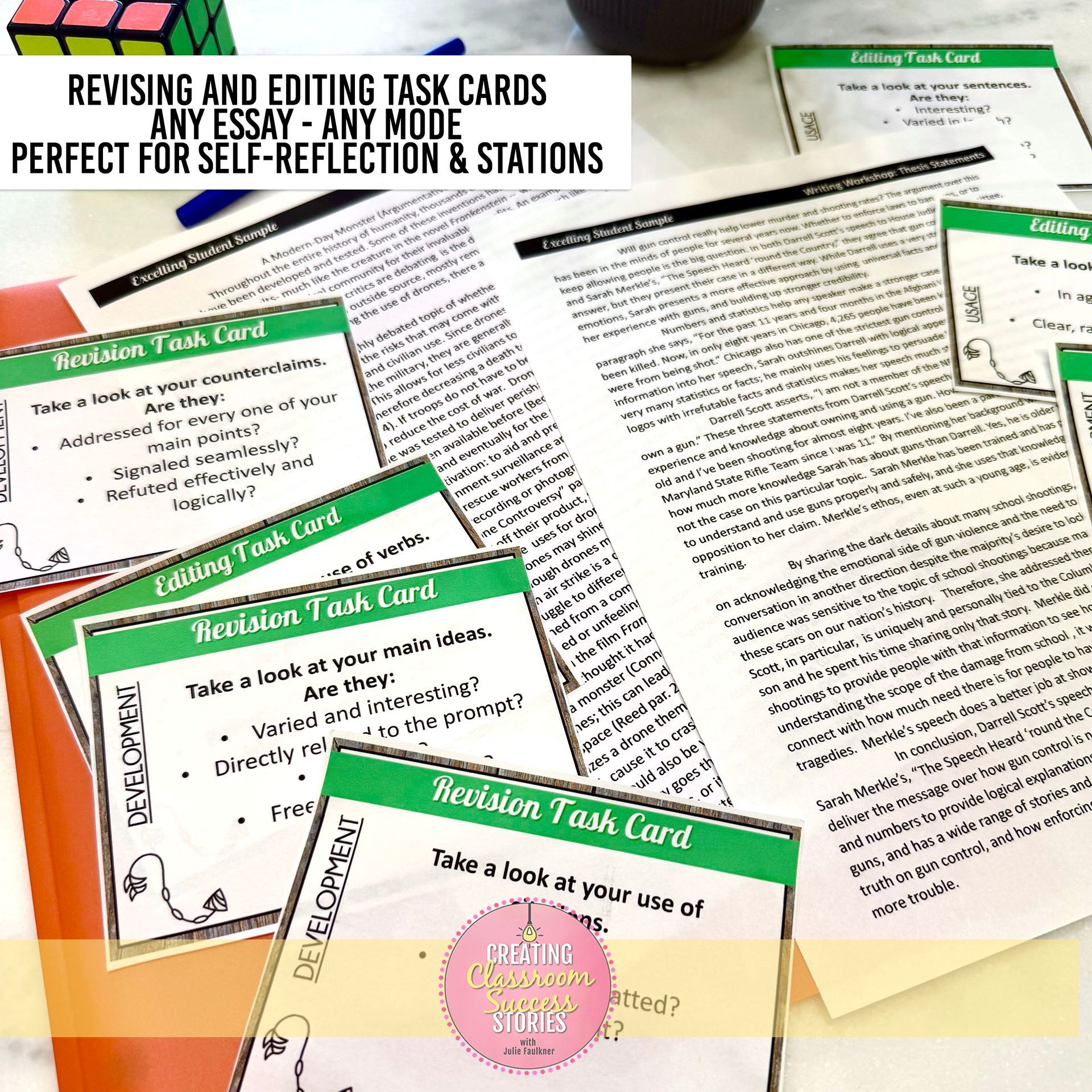
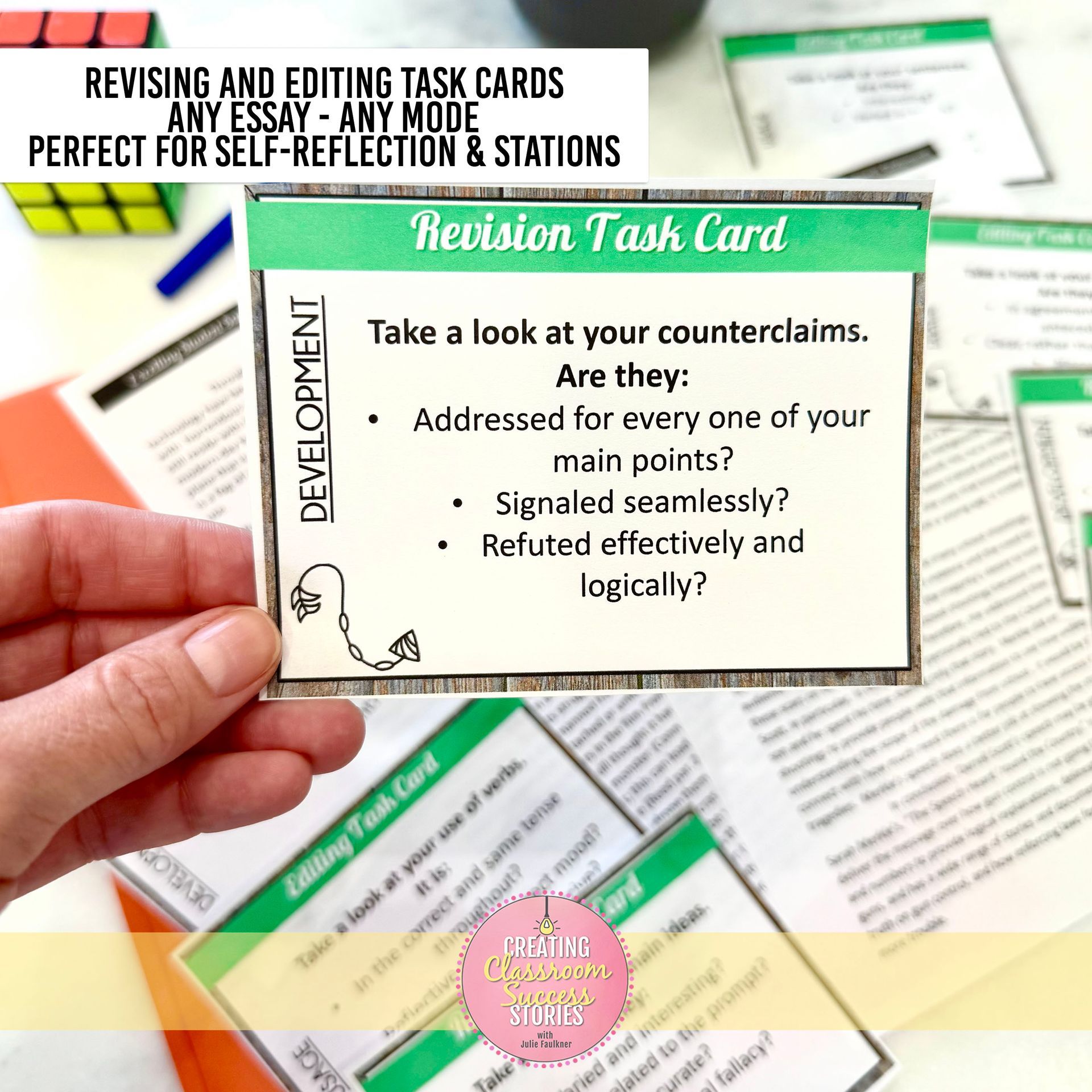
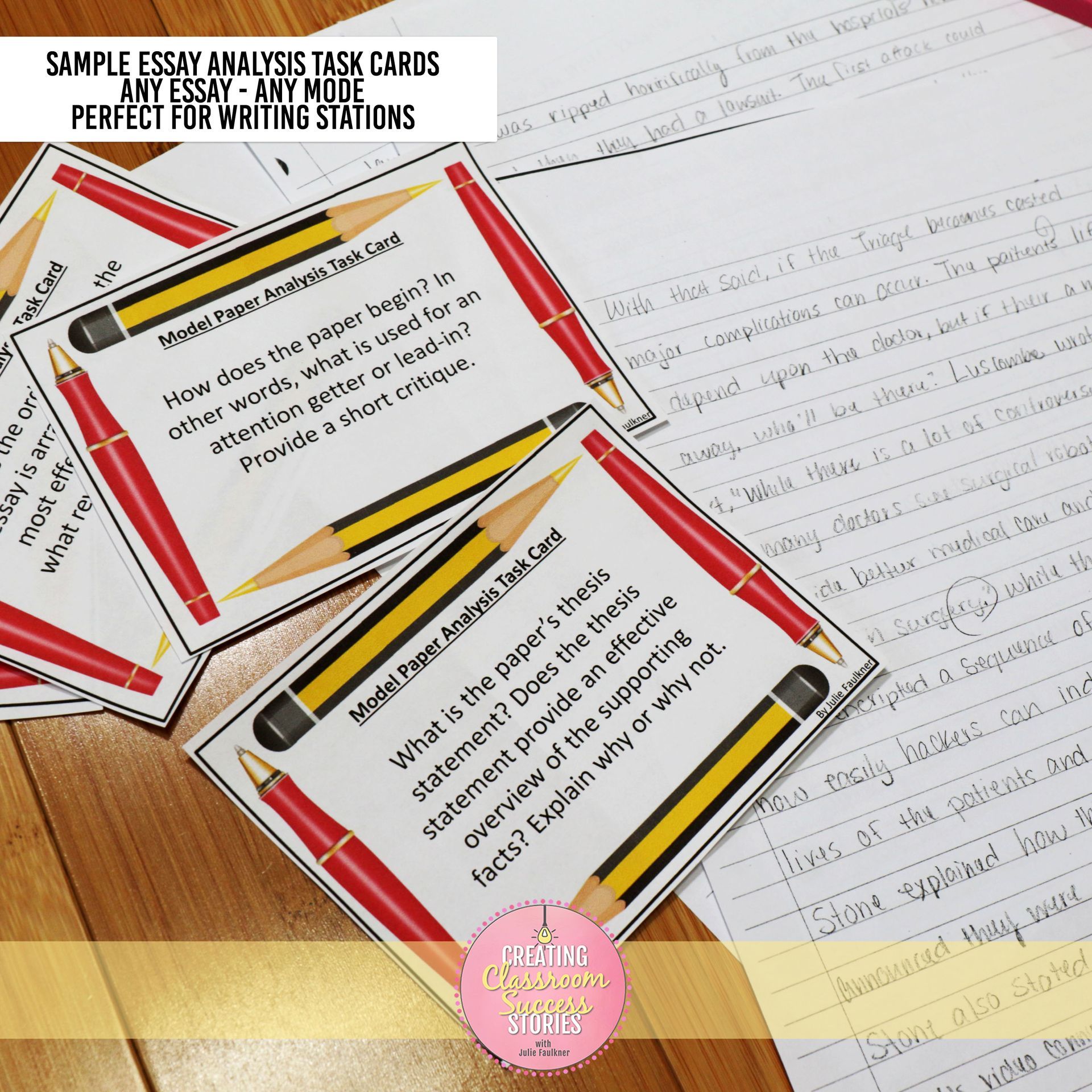
And sometimes, after a workshop, students need a little more guided practice before they’re ready to apply the skill independently. That’s where my revision task cards and model essay task cards come in — they give students structured, bite‑sized ways to practice the exact skill we just worked on, without overwhelming them with a full assignment.
5. Skill‑Focused Workshops Build Real Writing Confidence
Nothing beats watching students realize they can write. They just need the right tool at the right moment. When students understand one skill deeply, they start to believe, “I can do this.” And that self-confidence as a writer changes everything.
They stop saying “I’m bad at writing” and start saying:
- “I know how to revise this sentence.”
- “I know how to fix my thesis.”
- “I know how to explain this quote.”
Writing becomes a series of solvable problems instead of an overwhelming mystery. Skill‑focused workshops give students the tools to diagnose their own writing — and the confidence to improve it.

Closing: You Don’t Need a New Curriculum — You Need a New Approach
Your writing units are solid. Your pacing guides make sense. Your curriculum goals matter. You don’t need to reinvent your writing instruction.
You just need to teach writing the way students learn it:
One skill at a time.
One workshop at a time.
One step at a time.
Skill‑focused workshops make writing instruction manageable, flexible, and effective — for every grade level, every writing mode, and every teacher who’s tired of reteaching the same skills all year long.

Love this content?
Sign up for my email newsletter with more tips, ideas, success stories, and freebies!